

Daily Vitamins for Women Energy Levels: What Actually Helps
Last Updated: November 19, 2026
Quick Summary
Daily vitamins can support energy levels in women, mainly through B vitamins, which help cells convert food into usable energy, and the UK reference intakes for women aged 19 to 64 show what a healthy baseline looks like. Iron is the nutrient most likely to run short, so tiredness should be checked with a blood test before any supplement is started.
- B vitamins contribute to normal energy-yielding metabolism and act as cofactors, not stimulants.
- B12 contributes to the reduction of tiredness and fatigue, and to normal red blood cell formation.
- The UK reference intake for iron is 14.8 milligrams a day for women aged 19 to 49 and 8.7 milligrams a day for most women aged 50 and over. Those still having periods after age 50 may need the higher amount.
- Do not start a high-dose iron supplement on tiredness alone, because iron overload is harmful.
- Check with a pharmacist before taking supplements if you take regular medication.
Table of Contents
- Which Daily Vitamins Support Energy Levels in Women
- Vitamin Deficiency and Fatigue: When Tiredness Has a Nutritional Cause
- Iron Supplements for Women: Who Needs Them and How to Tell
- Building a Daily Routine With VITTOWOMEN and Natural Energy Habits
- Frequently Asked Questions
Which Daily Vitamins Support Energy Levels in Women
Tiredness is a symptom, not a diagnosis, and the nutrients linked to energy do different jobs. Knowing which does what helps judge whether daily vitamins are worth taking.
B vitamins and energy-yielding metabolism. Thiamin (B1), riboflavin (B2), niacin (B3), pantothenic acid (B5), vitamin B6, biotin (B7) and vitamin B12 all contribute to normal energy-yielding metabolism, the process by which cells convert food into usable energy. They are cofactors, not stimulants. Vitamin B12 also contributes to normal red blood cell formation, normal nervous system function and the reduction of tiredness and fatigue. Folate (B9) contributes to normal blood formation.
Vitamin C. Vitamin C contributes to the normal function of the immune system and to normal collagen formation for the normal function of skin.
Food sources include nuts, seeds, wholegrains, beans and dark green leafy vegetables.
Iron is covered separately below because need varies so much across a woman's life.
What the reference intakes actually are. For adult women aged 19 to 64, UK reference nutrient intakes (RNIs) are broadly: vitamin B12 1.5 micrograms, folate 200 micrograms, vitamin C 40 milligrams, magnesium 270 milligrams and vitamin D 10 micrograms. Iron reference intakes vary by age, as explained below. These prevent deficiency rather than optimise it, and are a useful yardstick when reading a label.
Watch out: more is not better. High-dose iron, vitamin B6 and vitamin D all carry risks, and supplements can interact with prescription medicines. If you take regular medication, check with a pharmacist first.
For a wider comparison, see our Supplements for Energy and Immune Support: A UK Guide and our best morning vitamins for sustained energy without the crash.
Vitamin Deficiency and Fatigue: When Tiredness Has a Nutritional Cause
Persistent tiredness can have many causes, and a vitamin shortfall is only one. Speak to your GP if fatigue lasts or worsens; the [NHS guidance on tiredness and fatigue | nhs.uk] is a useful starting point.
A supplement can fill gaps in a varied diet but cannot replace a proper diagnosis. Food supplements should not replace a varied, balanced diet and a healthy lifestyle.
Iron Supplements for Women: Who Needs Them and How to Tell
Iron is the nutrient most likely to run short in women, and the one where self-prescribing does the most harm. The NHS lists a UK reference intake for iron of 14.8 milligrams a day for women aged 19 to 49 and 8.7 milligrams a day for women aged 50 and over. Women who still have periods after age 50 may need the higher amount. The reference intake for men aged 19 and over is 8.7 milligrams a day.
Why women run low. Iron is lost in menstrual blood, used up in pregnancy and drawn on during breastfeeding. A typical UK diet supplies roughly 10 to 12 milligrams a day, and only 15 to 20 per cent is absorbed from a mixed diet, less from plant sources. Heavy periods, low intake, vegetarian and vegan diets, frequent blood donation and some gut conditions push absorption below need. The result is a spectrum: iron depletion, iron deficiency and iron deficiency anaemia. Fatigue, breathlessness on exertion, pallor, restless legs, brittle nails and hair thinning are common but none is specific.
Life stages change the picture. In the reproductive years, heavy menstrual bleeding is the single most common cause of iron deficiency in UK women, and worth raising with a GP if periods are consistently heavy or clot. In pregnancy, iron requirements rise sharply and the NHS recommends iron status is checked as part of routine antenatal care; supplements are usually prescribed only if a blood test shows deficiency. After the menopause, iron needs fall, and new deficiency should always be investigated rather than treated blindly. Athletes and women training hard for endurance events also have higher needs and losses.
How to tell, and what not to do. The only reliable way to know is a blood test through your GP. A full blood count shows haemoglobin and red cell size; ferritin shows stored iron, though it rises with inflammation and can look falsely normal. The [NHS page on iron deficiency anaemia | nhs.uk] explains the symptoms and when to seek advice. Do not start a high-dose iron supplement on tiredness alone: iron overload is harmful, and unnecessary iron can mask the real cause of your fatigue.
Food first, then supplement. Haem iron from red meat, poultry and fish is absorbed most efficiently. Non-haem iron from lentils, beans, tofu, fortified cereals, wholegrains and dark green leafy vegetables is absorbed less well but can be boosted by pairing it with a vitamin C source, orange juice, peppers or tomatoes, at the same meal. Tea, coffee, calcium and some medications reduce absorption, so leave a gap of about an hour either side.
If a supplement is advised. Ferrous sulphate is the standard NHS treatment and effective, but constipation, nausea and dark stools are common. Ferrous fumarate and ferrous gluconate are alternatives, and chelated ferrous bisglycinate is often better tolerated. Take iron with food if it upsets your stomach, and note it can interact with thyroid medication, some antibiotics and antacids, check with a pharmacist.
Check the full ingredient list of any supplement before assuming it covers your needs. If you are pregnant, breastfeeding, planning pregnancy or taking medication, ask a pharmacist or healthcare professional before use.
The article sets out the iron reference intakes and the main reasons women run low, which can be summarised at a glance.
| Life stage | UK RNI (iron) | Key point |
|---|---|---|
| Women aged 19 to 49 | 14.8 mg a day | Menstrual loss drives higher need |
| Women aged 50 and over | 8.7 mg a day | Those still having periods after age 50 may need 14.8 mg a day |
| Men (adult life) | 8.7 mg a day | Lower need throughout adulthood |
| Typical UK diet supply | 10 to 12 mg a day | Only 15 to 20% absorbed from mixed diet |
| Heavy periods | Common cause | Raise with GP if periods are consistently heavy |
| Pregnancy | Sharply higher | Iron status checked in routine antenatal care |
Building a Daily Routine With VITTOWOMEN and Natural Energy Habits
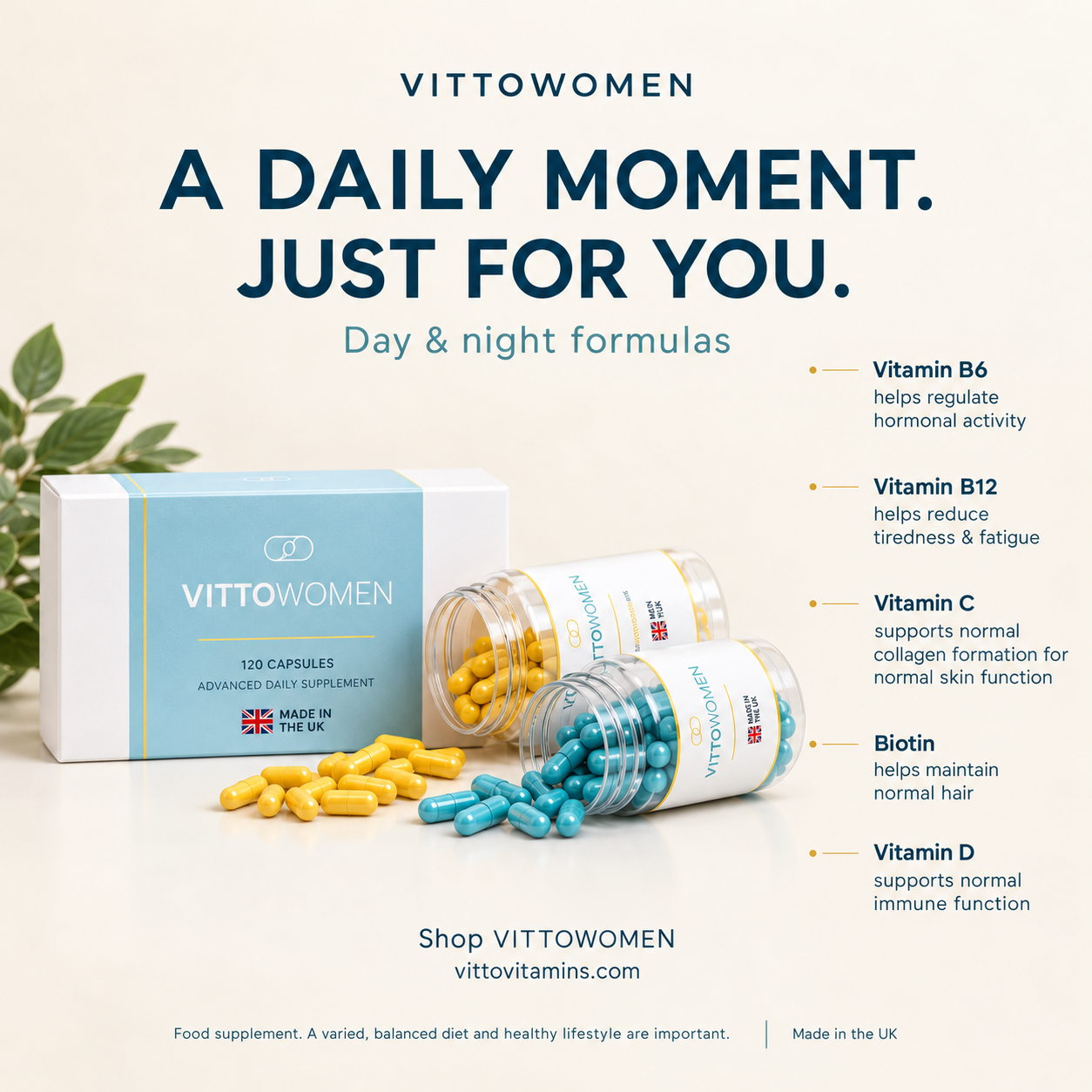
Consistency matters more than any single capsule. Take your Day capsule with a meal and your Night capsule before sleep, and keep both within easy reach so the routine becomes automatic. Sleep, regular meals and daily movement also support energy.

Results vary from person to person. Give any routine several weeks before judging it. For practical ideas, read our guide to simplifying your daily supplement routine and our look at how long supplement results take.
Ready to try a simpler routine? Shop VITTOWOMEN for £59.00 and keep your day and night formulas in one organised pack.
Frequently Asked Questions
What vitamins are good for energy in women?
Vitamin B12 contributes to normal energy-yielding metabolism and to the reduction of tiredness and fatigue, which is why it is among the most cited nutrients for energy. A daily multivitamin such as VITTOWOMEN (£59.00) provides B vitamins in a single routine, but it works best alongside a varied diet. If tiredness persists, a healthcare professional can check levels before you assume a vitamin is the cause.
Can a multivitamin help with tiredness?
A multivitamin can help when tiredness is linked to a gap in daily intake, because it supplies B12 and other nutrients involved in energy-yielding metabolism. It will not fix tiredness caused by poor sleep, stress, illness or a medical condition. Results vary, and it is reasonable to give a routine several weeks before judging it. Food supplements should not replace a varied, balanced diet and a healthy lifestyle, and anyone who is pregnant, breastfeeding or taking medication should check with a pharmacist first.
When should persistent tiredness be discussed with a healthcare professional?
Tiredness that lasts for several weeks, worsens over time, or arrives with symptoms such as breathlessness, dizziness, heavy periods, low mood or unexplained weight change deserves a proper check. A GP can order blood tests for iron, ferritin, B12 and vitamin D, which show whether a deficiency is present. Supplements should follow a diagnosis rather than replace one, and you should follow the directions on your pack without exceeding the recommended daily dose.
