

Why Take Supplements at Night: 5 Timing Rules That Work
Last Updated: November 14, 2026
Quick Summary
Taking supplements at night works because some nutrients absorb better when your body is resting and digesting, especially fat-soluble vitamins taken with an evening meal containing fat. Magnesium, vitamin B6, collagen, hyaluronic acid and zinc are common nighttime choices, while B vitamins and iron suit the morning.
- Fat-soluble vitamins A, D, E and K need dietary fat, so take them with your largest meal, often dinner.
- Keep B vitamins and iron at breakfast, fat-soluble vitamins at dinner, and magnesium before bed as a starting pattern.
- Iron and calcium compete for absorption, so keep those doses a few hours apart.
- Avoid late doses of B12 and caffeine-containing blends, which can feel energising and disturb sleep.
- If you miss a dose, take it when you remember unless it is close to the next one, and never double up.
Table of Contents
- Why Take Supplements at Night: The Absorption Case
- Morning or Night Vitamins: A Comparison Table
- Best Supplements to Take Before Bed
- When to Take Supplements for Absorption
- Supplements That May Affect Sleep
- Building Your Day and Night Routine with Vitto
- Frequently Asked Questions
Why Take Supplements at Night: The Absorption Case
Taking supplements at night works for one simple reason: some nutrients absorb better when your body is resting and digesting. Day and night packs can be built around that idea.
Not every nutrient suits a nighttime dose. Some can keep you awake. Others pair well with the evening meal and the slower pace of sleep. Getting the timing right matters more than most labels admit.
Fat-Soluble vs Water-Soluble Vitamins
Fat-soluble vitamins, including A, D, E and K, need dietary fat to absorb well. Taking them with an evening meal that contains some fat helps your body use them. Water-soluble vitamins, such as B vitamins and vitamin C, dissolve in water and are used quickly. They do not need fat, but they do need a consistent schedule.
The practical takeaway is simple:
- Take fat-soluble vitamins with a meal that contains fat
- Take water-soluble vitamins at a time you will remember daily
- Split your routine if one dose upsets your stomach
The Role of Food and Digestion
Food changes how well your body absorbs nutrients. A common mistake is taking a full dose on an empty stomach and feeling queasy. Many people find a small meal or snack helps.
Digestion slows at night, but it does not stop. An evening dose taken with dinner still gets processed. The key is not to lie down straight after a large dose with a lot of water.
Morning or Night Vitamins: A Comparison Table
Morning often suits energising nutrients. Night often suits minerals and calming formulas. But the useful question is not which slot is 'better', it is which slot fits each nutrient's absorption needs and your own routine. The table below compares the two timings on the factors that actually change outcomes.
| Factor | Morning Dose | Night Dose |
|---|---|---|
| Best for | B12, vitamin C, iron (with vitamin C), energising blends | Magnesium, vitamin D with an evening meal, skin and repair formulas |
| Absorption with food | With breakfast, especially if it contains fat | With dinner or a small snack before sleep |
| Routine risk | Easy to forget when rushing | Tied to a wind-down habit, so more consistent for many people |
| Sleep impact | Can feel stimulating for some | Can support relaxation; some nutrients may disturb sleep |
| Missed-dose risk | Higher on busy mornings | Lower if paired with bedtime |
| Competing nutrients | Calcium and iron compete; tea and coffee reduce iron uptake | Calcium and magnesium can compete at high doses |
How to choose your slot
Work through three checks in order. First, does the nutrient need dietary fat? Second, does it energise you or upset your stomach? Third, will you actually remember it?
A common pattern is to keep B vitamins and iron at breakfast, fat-soluble vitamins at dinner, and magnesium before bed.
Watch out: if you take levothyroxine or other prescription medicines, timing changes can affect absorption, so check with a pharmacist before moving doses around.
If you are weighing up your morning options in more detail, our guide to the best morning vitamins for sustained energy covers what to look for.
Best Supplements to Take Before Bed
Magnesium is a commonly discussed mineral for a nighttime routine, and many people find it fits well before sleep. Vitamin B6 and magnesium appear together in the VITTOMEN and VITTOWOMEN night formulas.
Skin-focused nutrients also suit the evening. Marine collagen, hyaluronic acid and zinc are common in night formulas aimed at skin maintenance. Our day and night skin supplement pairs these into one pack.

A simple shortlist for nighttime:
- Magnesium for muscle and nerve support
- Vitamin B6 alongside magnesium
- Collagen and hyaluronic acid for skin
When to Take Supplements for Absorption
The best time to take a supplement is when you will actually remember it and when it absorbs well with food. That answer differs by nutrient, so match the dose to the meal. Consistency often matters more than the precise clock time, and some nutrients absorb better in specific conditions.
A supplement-by-supplement timing chart
Use this as a practical reference, then check your own product label, because dose and formulation change the advice.
| Supplement | Food needed? | Best time | Notes |
|---|---|---|---|
| Vitamin A, D, E, K | Yes, dietary fat | With largest meal, often dinner | Fat-soluble; absorption improves with fat |
| Vitamin C | Optional | Morning or with breakfast | Can upset the stomach on an empty stomach |
| B vitamins (including B12) | Optional | Morning | Can feel energising; avoid late at night |
| Iron | Yes, with vitamin C | Morning, away from tea and coffee | Calcium and tannins reduce uptake |
| Calcium | Yes | With a meal, split from iron | High doses compete with iron and magnesium |
| Magnesium | Optional | Evening or before bed | May support relaxation; high doses can loosen stools |
| Zinc | Yes, modest amount | With a meal | High doses can cause nausea on an empty stomach |
| Collagen and hyaluronic acid | Optional | Evening | Often paired in night formulas for skin |
Meals, competition and spacing
Food does two things: it buffers nutrients that irritate the stomach, and it supplies the fat that fat-soluble vitamins need. A common mistake is taking a full dose on an empty stomach and feeling queasy. Many people find a small meal or snack helps.
Spacing matters when nutrients compete. Iron and calcium compete for absorption, so keep them a few hours apart. Tea and coffee reduce iron uptake, so leave a gap around your iron dose (the NHS).
Digestion slows at night, but it does not stop. An evening dose taken with dinner still gets processed. The key is not to lie down straight after a large dose with a lot of water.
What to do after a missed dose
If you miss a dose, take it when you remember unless it is close to the next one. Do not double up to catch up, and do not take an energising supplement late at night just to stay on schedule.
Dose and formulation matter too. Check your supplement label for the daily portion and do not exceed it. The NHS guidance on vitamins and minerals is a sensible starting point for daily needs.
Supplements That May Affect Sleep
Some supplements can interfere with sleep if taken too late. Vitamin B12 contributes to normal energy-yielding metabolism and to the reduction of tiredness and fatigue, so many people take B vitamins in the morning.
If you notice restlessness after a B-complex taken late, consider moving that dose to breakfast.
Signs a supplement may be disrupting your sleep:
- You feel wired after your evening dose
- You wake more often through the night
- Your sleep patterns change after starting a new product
If you take medication or manage a health condition, ask a pharmacist or healthcare professional before adding anything new.
Building Your Day and Night Routine with Vitto
A routine works best when it is simple enough to repeat without thinking. That is the idea behind our day and night packs: one clear capsule in the morning, one at night.

For men, VITTOMEN pairs a day capsule with a night capsule that carries a higher magnesium dose. For women, VITTOWOMEN follows the same day and night split. If you want to organise your whole schedule, our guide on how to simplify your daily supplement routine walks through it step by step.
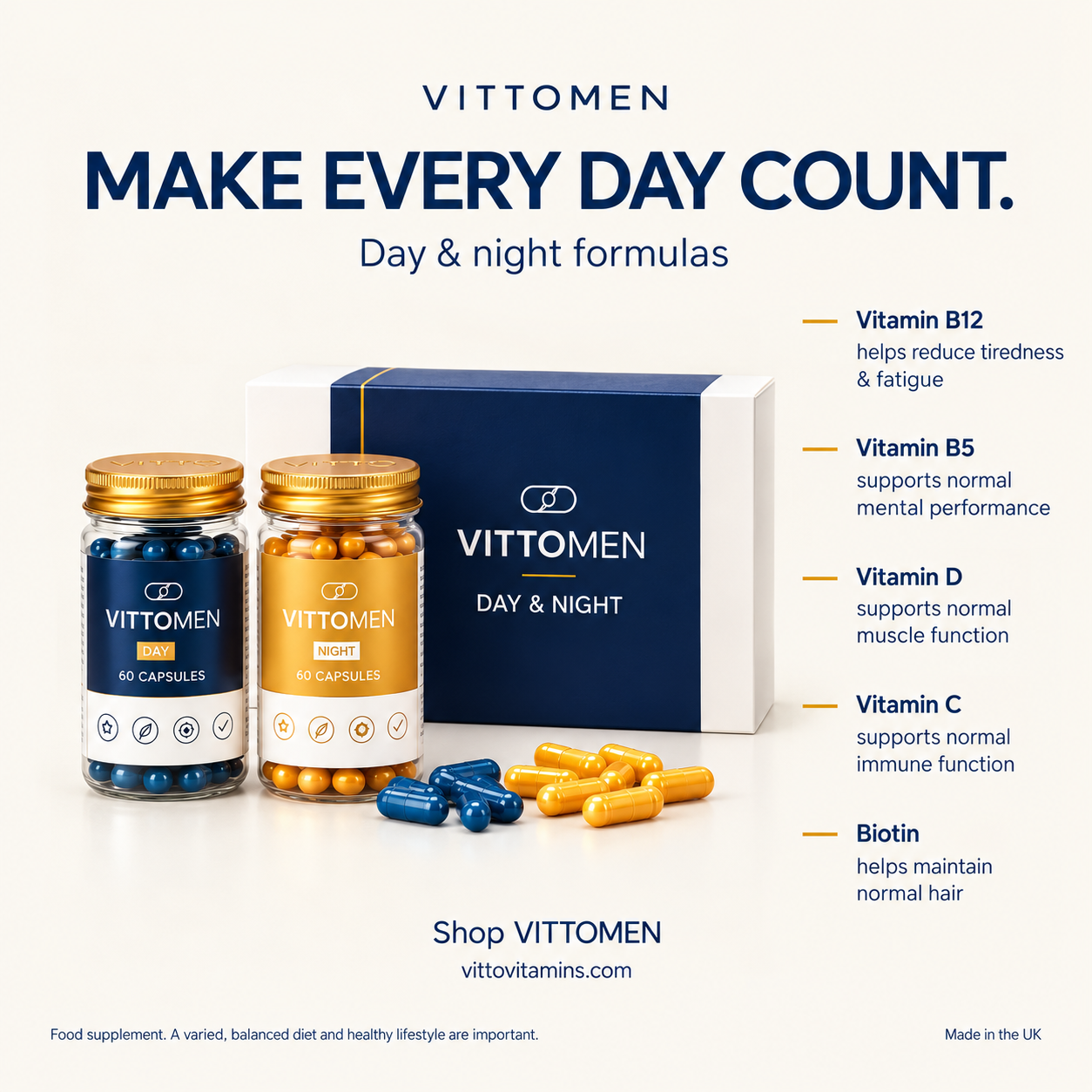

Our advice: keep the pack where you will see it. Morning dose with breakfast, night dose as you wind down. That habit does more than any single ingredient.
Getting supplement timing right takes a little planning, but the payoff is a routine you can keep.
Frequently Asked Questions
Why do people take supplements at night?
People take supplements at night for two main reasons. First, some nutrients are better absorbed with an evening meal, particularly fat-soluble vitamins like A, D, E and K. Second, certain ingredients such as magnesium may support relaxation and sleep quality. A night-time routine also suits people who forget morning doses. If you follow a structured day and night pack, the evening formula removes guesswork about what to take before bed.
Can taking vitamins at night affect sleep?
It depends on the vitamin. Magnesium and vitamin B6 are often taken in the evening. However, B12 and other energising B vitamins can interfere with sleep in some people, so many prefer to take them in the morning. If you notice restless sleep after starting a new night-time supplement, move the dose earlier in the day and speak to a pharmacist if symptoms continue.
Is it better to take vitamins in the morning or at night?
There is no single rule. Water-soluble vitamins like C and B12 are often taken in the morning with food, while fat-soluble vitamins and minerals such as magnesium may suit an evening meal. Your own tolerance matters most. A day and night format, such as VITTOMEN or VITTOWOMEN, splits nutrients so each is taken at a time that supports absorption and routine, but check the label for specific guidance.
Should supplements be taken with food or on an empty stomach?
Most supplements are best taken with food to reduce stomach upset and improve absorption of fat-soluble nutrients. Magnesium and certain B vitamins are generally fine with a meal. Some probiotics and specific formulations are designed for an empty stomach, so always read the label. If you take medication, ask a pharmacist before adding any supplement, as food and drugs can interact with absorption.
